WISC Test Guide: What It Measures, Scores, Age Range, and WAIS Differences
The WISC test is one of the best-known cognitive assessments for children, but search results can make it sound simpler than it is. Parents may see phrases like WISC test online, WISC test PDF, WISC test free, WISC test for kids, or WISC testing near me and wonder whether they are all talking about the same thing. In practice, the WISC is a professionally administered assessment used to understand a child's learning profile across several areas of thinking. For families comparing child and adult cognitive testing, plain-language cognitive assessment resources can also help explain where the WAIS fits once a person is older.
What the WISC Test Is Designed to Show
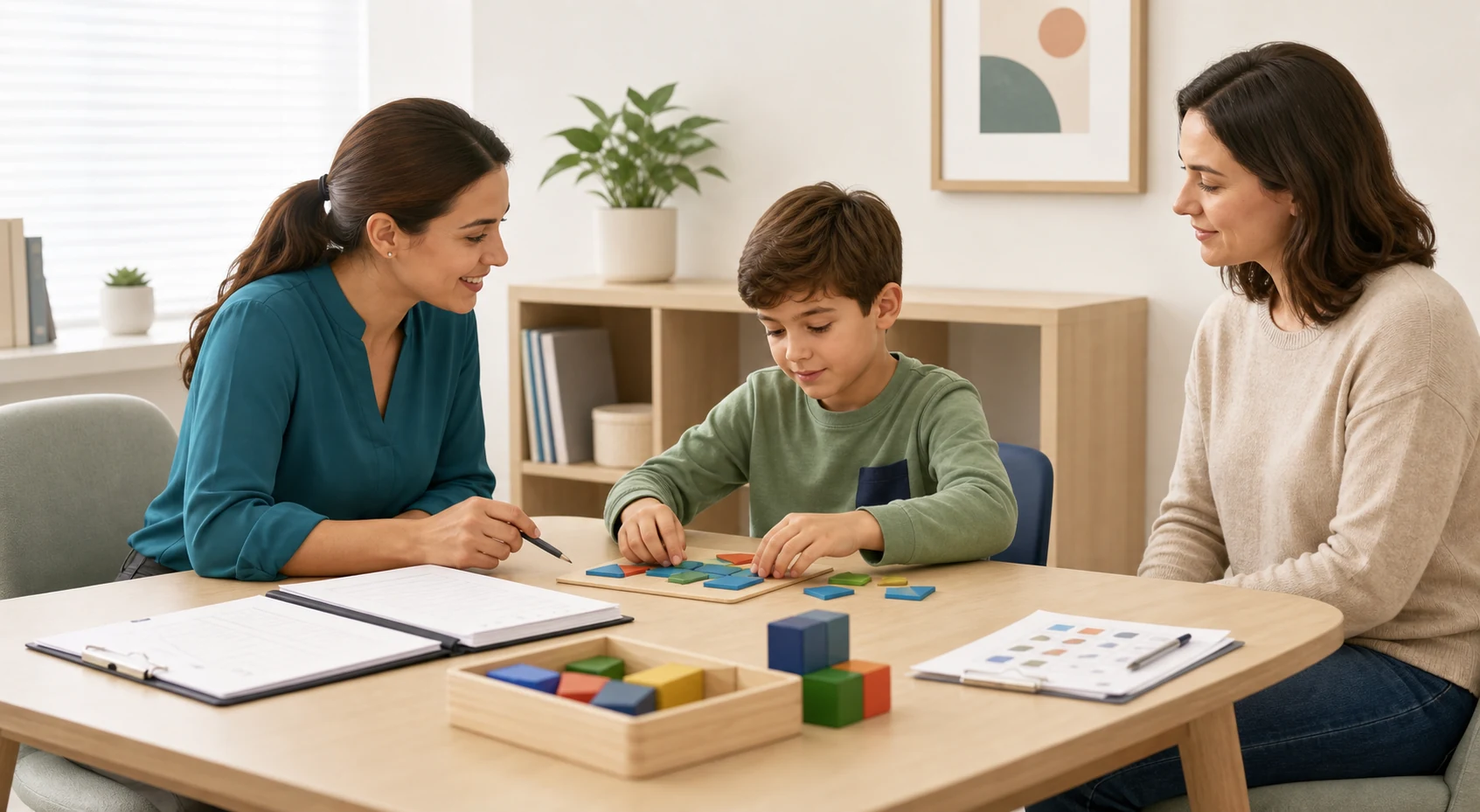
WISC stands for Wechsler Intelligence Scale for Children. The current WISC-V is commonly described as an individually administered cognitive ability test for children from age 6 years 0 months through 16 years 11 months. It is usually given one-to-one by a trained professional, often a psychologist or school psychologist, because the materials, timing, scoring, and interpretation require controlled administration.
The WISC test does not simply ask whether a child is "smart." It looks at how a child handles different kinds of thinking tasks. A strong score in one area and a lower score in another may be more useful than a single overall number, because that pattern can explain why schoolwork feels easy in one setting and harder in another.
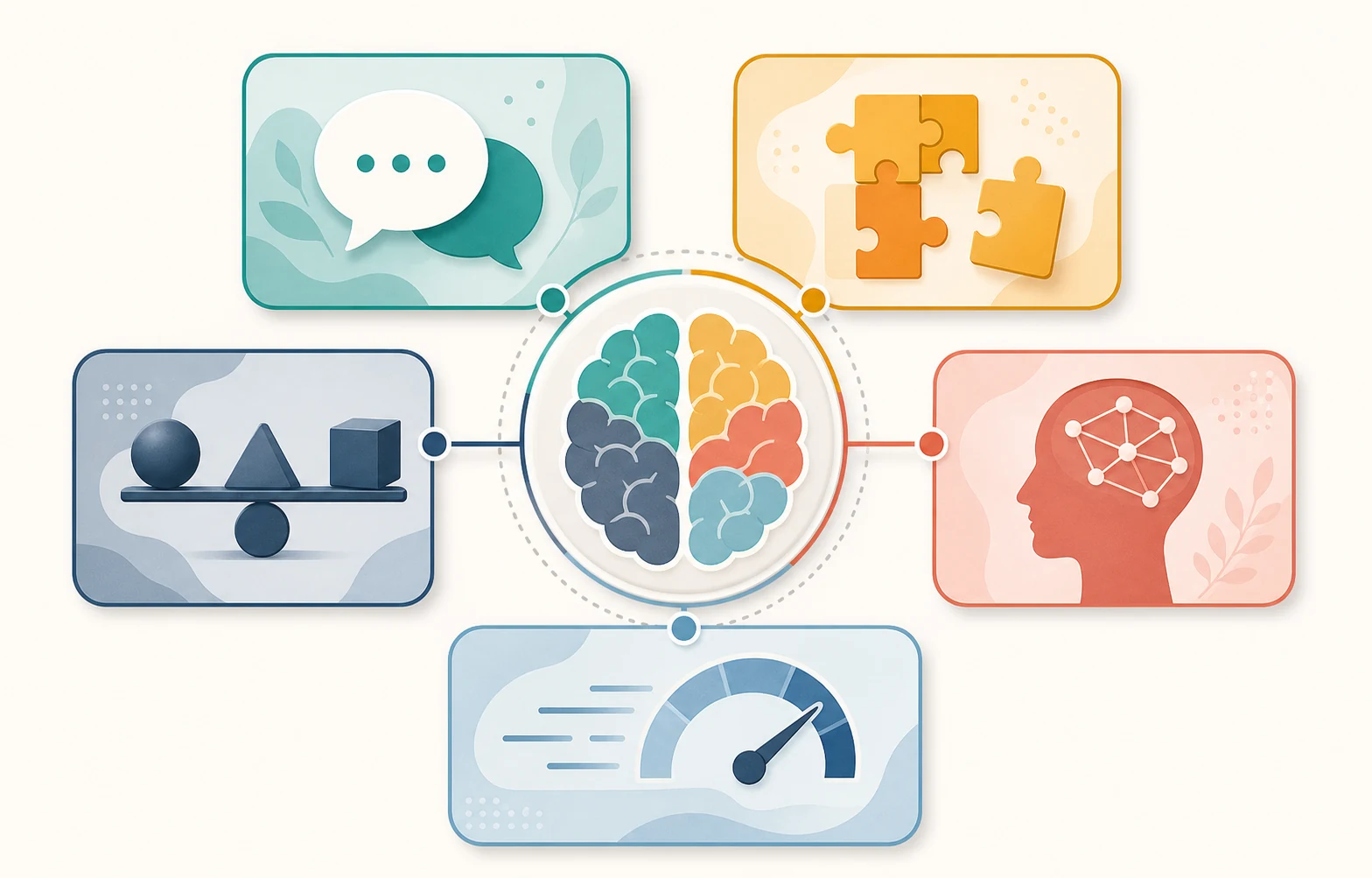
The most common WISC-V score areas are:
- Verbal Comprehension: word knowledge, verbal reasoning, and explaining ideas.
- Visual Spatial: analyzing designs, patterns, and spatial relationships.
- Fluid Reasoning: solving new problems and seeing relationships.
- Working Memory: holding and using information for a short time.
- Processing Speed: working quickly and accurately on simple visual tasks.
These areas are often discussed with a Full Scale IQ score, but the overall score should be read with context. If the index scores are very uneven, the broad score may hide the child's real pattern of strengths and needs.
WISC Test Age Range: Children, Teens, and Adults
The WISC test is built for children and adolescents, not for most adults. For a child in the 6 to 16 age range, the WISC may be considered when a school, clinician, or family needs a structured view of cognitive abilities. For younger children, a preschool-focused Wechsler scale may be more appropriate. For adults, the related instrument is the WAIS, or Wechsler Adult Intelligence Scale.
That age distinction matters because many people search for "WISC test for adults" when they really mean "a Wechsler-style IQ test for an adult." A 20-year-old would normally not be evaluated with the child scale. An older teenager near the boundary may require professional judgment about which instrument fits the question, the referral reason, and the person's developmental history.
For WAISTest.com readers, the cleanest way to think about the relationship is this: WISC helps explain a child's cognitive profile, while WAIS helps explain an adult cognitive profile. The names are similar because they belong to the same broad family of Wechsler scales, but the age norms and interpretation context are different.
What WISC Scores Mean in Plain English
WISC scores are usually reported as standard scores. Many composite scores use an average of 100 and a standard deviation of 15. In everyday language, scores near 100 are usually considered broadly average, while higher or lower scores may suggest relative strengths or areas that deserve closer review.
The phrase "good score on the WISC" can be misleading. A good result is not only a high number. A useful result is one that helps parents, schools, and qualified professionals understand how the child learns. For example, a child may have strong verbal reasoning but slower processing speed. That pattern can look like deep understanding paired with slow written output, which is very different from low motivation.
Gifted program cutoffs vary by school district, private program, and region. Some programs use IQ or index scores around 130 as one part of eligibility, while others use percentiles, achievement testing, teacher input, portfolios, or local criteria. Parents should ask the program exactly which score is considered and whether a single number is enough.
WISC Test Online, Free, and PDF Searches: What to Know
Search demand around the WISC often includes WISC test online, free WISC test online, WISC test PDF, WISC test PDF free download, and WISC practice test. These searches usually mix three very different things:
- General explanations of what the WISC measures.
- Sample-style practice questions that build familiarity with task types.
- Restricted professional materials that should only be used by qualified examiners.
A true WISC administration is not the same as an online quiz. The professional test depends on standardized materials, timing rules, scoring procedures, observation, and interpretation. A free worksheet or unofficial PDF may help a parent understand examples of verbal reasoning, visual puzzles, or working memory, but it should not be treated as a real WISC score.
This is also why "WISC testing kit" searches can be confusing. Professional kits and record forms are controlled materials. Parents generally do not need to buy them. If your child is being evaluated, the more practical questions are who will administer the assessment, what other tests may be included, how results will be explained, and whether the report connects scores to useful school or home supports.
If your longer-term question is how child scores compare with adult cognitive profiles, WAIS score and subtest explainers can make the adult side easier to understand without treating a web resource as a formal evaluation.
WISC Testing Near Me: Who Usually Administers It
WISC testing is commonly offered through school systems, private psychologists, neuropsychologists, educational psychologists, university clinics, and specialized assessment programs. The right path depends on why the assessment is being requested.
Families often seek WISC testing for private school admissions, gifted programming, educational planning, learning concerns, attention questions, or a broader psychoeducational evaluation. The WISC may be only one part of a larger assessment battery. Achievement tests, behavior rating scales, interviews, classroom data, and developmental history may also be used to understand the child in context.
Before scheduling, parents can ask:
- What question is the evaluation trying to answer?
- Which Wechsler edition or alternative instrument will be used?
- Will the report include index scores and plain-English interpretation?
- Are achievement, attention, executive function, or behavior measures included?
- How will recommendations be connected to school planning?
- What are the fees, wait time, and report turnaround?

The WISC alone should not be treated as a complete answer to ADHD, learning disability, emotional, or educational placement questions. It can contribute useful cognitive information, but broader conclusions require multiple data sources and professional judgment.
WISC Test Examples: Familiarity Without Overtraining
Parents often want WISC test examples because they want a child to feel comfortable. That is reasonable, but there is a difference between reducing anxiety and trying to rehearse protected test content. The healthier goal is familiarity with task styles: listening carefully, explaining similarities, solving visual patterns, remembering information briefly, and working steadily when a task is timed.
Helpful preparation can be simple:
- Keep sleep, meals, glasses, hearing aids, and medication routines consistent with professional guidance.
- Tell the child the session includes puzzles, questions, and problem-solving tasks.
- Avoid promising that every question will be easy.
- Avoid turning the assessment into a high-stakes performance event.
- Bring relevant school records, prior testing, and teacher notes if requested.
For many children, the best preparation is emotional. A child who understands that the evaluator is learning how they think may feel less pressure than a child who believes the session will decide whether they are "smart enough."
How WISC Results Can Support School Planning
The most useful WISC reports translate scores into learning implications. A lower Working Memory score may suggest that multi-step oral directions are hard to hold in mind. A lower Processing Speed score may explain slow output on timed visual or written tasks. A strong Verbal Comprehension score may suggest that discussion, vocabulary-rich teaching, and oral explanation are strengths.
None of these patterns automatically tells a school what to do. They provide clues. A thoughtful report may suggest strategies such as written directions, extra processing time where appropriate, breaking assignments into steps, checking understanding, using visual supports, or offering enrichment in areas of strength. Eligibility for specific services depends on local rules and the full evaluation record.
Parents should read the report with two questions in mind. First, what does this score pattern say about how my child learns? Second, what support or enrichment would help the child use strengths while reducing avoidable friction? Those questions are more practical than focusing only on the Full Scale IQ.
WISC and WAIS: Why the Difference Matters
The WISC and WAIS are related but not interchangeable. The WISC uses child and adolescent norms. The WAIS uses adult norms. Both may discuss verbal reasoning, working memory, processing speed, and other cognitive abilities, but the tasks, age comparisons, and interpretation context are built for different life stages.
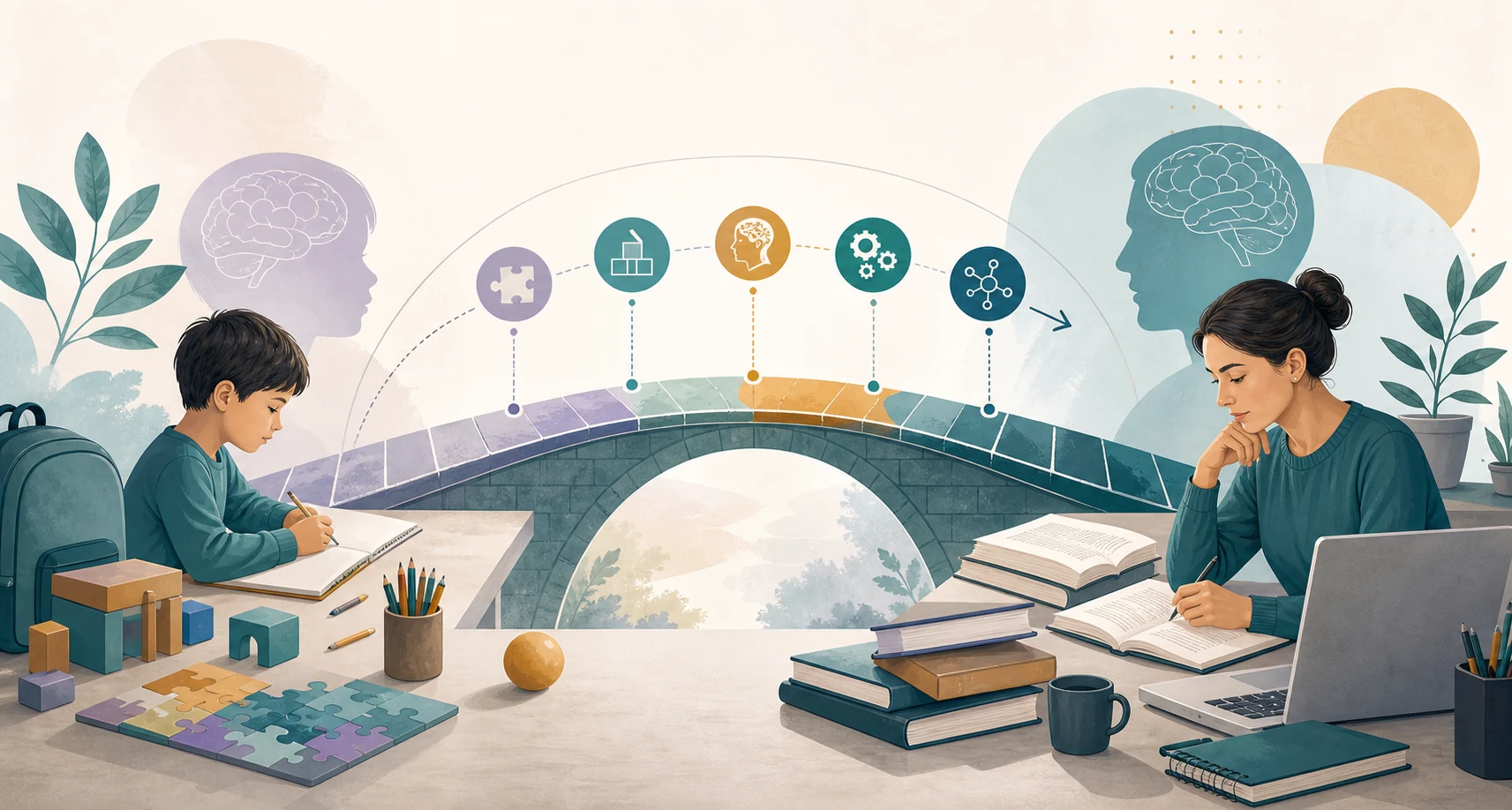
This matters for families because a child profile can change meaning as the person grows. A student who once had a WISC report may later need a WAIS-based evaluation for college accommodations, adult learning questions, career-related self-understanding, or clinical assessment. The earlier child report may still be useful background, but it is not a current adult score.
It also matters for searchers who type "WISC IQ test adults." If the person is an adult, the adult scale is usually the relevant Wechsler family instrument. A WISC article can still be helpful because it explains the vocabulary of index scores and cognitive profiles, but it should point the reader toward the age-appropriate scale.
Using WISC Insights Alongside WAIS Learning
A WISC test result is best viewed as a structured learning profile, not a permanent label. It can help families ask better questions about school fit, academic support, enrichment, and communication with professionals. It can also introduce the broader idea that cognitive scores are patterns, not just a single number.
For adults, older teens, parents, and students who want to understand how Wechsler-style scores are discussed beyond childhood, WAISTest.com offers an adult cognitive profile learning hub focused on WAIS concepts, score interpretation, and accessible explanations. Use it as an educational companion, not as a substitute for a formal assessment or qualified professional guidance.

FAQ
What does the WISC test for?
The WISC test assesses several areas of cognitive ability in children, including verbal reasoning, visual spatial thinking, fluid reasoning, working memory, and processing speed. It usually also provides a Full Scale IQ score. The most useful interpretation looks at the whole pattern rather than treating one number as the full story.
What is the gifted IQ range for WISC?
Many gifted programs use scores around 130 or above as one possible marker, but there is no universal cutoff that applies everywhere. Some programs use percentiles, achievement scores, teacher input, portfolios, or local criteria. Ask the specific school or program which score matters and how it is combined with other evidence.
Can the WISC identify ADHD by itself?
No. The WISC may show patterns that raise useful questions about attention, working memory, processing speed, or task behavior, but it is not a complete ADHD evaluation by itself. Professionals usually need interviews, rating scales, developmental history, school data, and other measures before making clinical or educational conclusions.
What is a good score on the WISC?
A score around 100 is generally considered average on many WISC composite scales, with higher and lower scores interpreted in relation to the standard score range and the child's age group. A "good" result is one that helps explain learning strengths, support needs, and next steps, not only one that looks high.
Is a free WISC test online the same as the real assessment?
No. Free online quizzes or sample questions may help explain task types, but they do not reproduce standardized administration, scoring, observation, or interpretation. Treat them as educational examples only. If a formal result is needed, use a qualified evaluator.
Is the WISC test for adults?
The WISC is primarily for children and adolescents from 6:0 through 16:11. Adults are usually evaluated with the WAIS, the Wechsler Adult Intelligence Scale. If a teenager is near the age boundary, the evaluator can decide which instrument best fits the referral question.