WAIS Working Memory: Digit Span, Arithmetic & Letter-Number Sequencing
Have you ever wondered what your WAIS test results really mean when it comes to your ability to hold and manipulate information in your mind? How does your brain handle several tasks at once? Working memory is the cognitive engine that powers everything from complex problem-solving to learning new skills in a fast-paced environment.
In the Wechsler Adult Intelligence Scale (WAIS), working memory is a vital pillar of the overall IQ score. It measures how well you can take in information, keep it active, and use it to solve a problem. If you have already completed a formal assessment, you might want to explore the guide to see how these specific scores fit into your broader cognitive profile.
This article provides a deep dive into the three core WAIS Working Memory subtests: Digit Span, Arithmetic, and Letter-Number Sequencing. We will explain how they are administered, what they reveal about your brain, and how you can interpret your results for personal growth.
Understanding WAIS Working Memory Assessment
Working memory is more than just "short-term memory." While short-term memory is like a storage bin, working memory is like a workbench. It is the ability to hold onto information while simultaneously processing or changing it. In the context of a WAIS assessment, this index provides a window into your mental efficiency and focus.
What Working Memory Measures in Cognitive Functioning
In cognitive psychology, working memory measures your "mental workspace." This capacity is limited for everyone, but the size of that workspace varies. It involves your ability to focus your attention, ignore distractions, and manipulate data "on the fly."
Working memory is closely linked to executive function. This is the part of the brain responsible for planning, organizing, and executing tasks. When you are tested on this index, psychologists are looking at how much information you can juggle before your "mental buffer" becomes overloaded. High performance usually suggests strong attention and a high level of mental flexibility.
Why Working Memory Matters in Daily Life
We use working memory constantly in our everyday routines. For example, when someone gives you a phone number and you repeat it in your head until you find a pen, you are using working memory. In a professional setting, it allows you to follow complex, multi-step instructions without getting lost.
Difficulties with working memory can manifest as "mental fog" or frequent forgetfulness. You might find it hard to follow a long conversation or struggle with reading comprehension because you forget the beginning of a sentence by the time you reach the end.
Understanding your score can help you identify if these challenges are related to your cognitive structure. You can get an analysis of your current scores to see how they impact your daily life.
The Three WAIS Working Memory Subtests: Administration and Scoring
The WAIS uses specific tasks to push your mental limits. These subtests are designed to be challenging. They start with easy items and gradually become more difficult to find exactly where your capacity ends.
Digit Span Subtest: What It Measures and How It's Administered
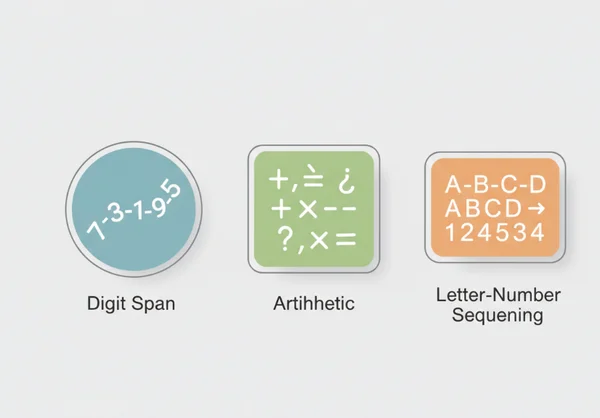
The Digit Span subtest is the most famous part of the Working Memory Index. In this task, the examiner reads a series of numbers aloud at a steady pace. Your job is to repeat them exactly as heard.
There are usually three parts to this subtest:
- Digit Span Forward: You repeat the numbers in the same order. This measures basic scanning and sequential processing.
- Digit Span Backward: You must repeat the numbers in reverse order. This requires you to hold the numbers and mentally "flip" them.
- Digit Span Sequencing: You listen to a scrambled list of numbers and repeat them in ascending order.
Scoring depends on the length of the longest string of numbers you can correctly recall. It measures your "memory span" and your ability to transform information mentally.
Arithmetic Subtest: Mental Calculation Under Pressure
The Arithmetic subtest involves solving math problems in your head. Unlike a school math test, you cannot use a calculator or a piece of paper. The examiner reads a word problem, and you must provide the answer within a specific time limit.
This subtest is unique because it combines math skills with working memory. You must remember the numbers in the problem, determine which operation to use, and calculate the result—all while the clock is ticking.
This measures how well you can concentrate and process information under pressure. If you find mental math difficult, it might be a sign of working memory bottlenecks rather than a lack of math ability.
Letter-Number Sequencing: Organizing Mixed Information
The Letter-Number Sequencing subtest is often considered the most complex working memory task. The examiner reads a combination of letters and numbers in a random order (for example, "B-2-A-1"). You must repeat them back by giving the numbers first in ascending order, followed by the letters in alphabetical order ("1-2-A-B").
This subtest reveals a lot about your executive function. It requires you to categorize information while holding it in your mind. It tests your ability to switch between different rules (numbers vs. letters) quickly. High scores here often correlate with strong analytical skills and the ability to manage complex data sets at work or in school.
Interpreting Working Memory Subtest Results
Once the testing is over, you receive a set of scores. Understanding these numbers is key to knowing your cognitive strengths. To get a better grasp of your individual data, you can check your scores through our specialized analysis tool.
Understanding Working Memory Index Scores
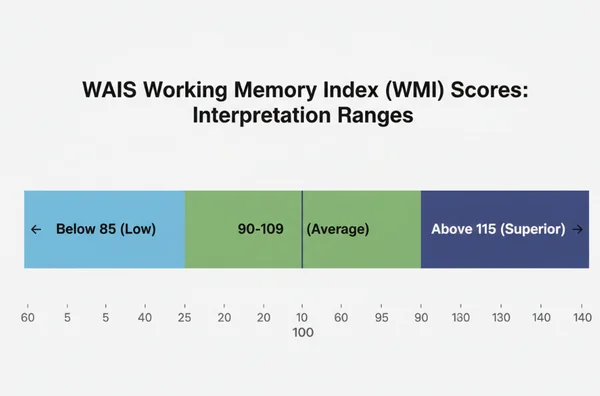
The scores from the subtests mentioned above are combined to create the Working Memory Index (WMI). In the WAIS system, the average score is typically set at 100.
- Scores above 115: These are considered "High Average" or "Superior," indicating a large mental workspace.
- Scores between 90 and 109: This is the "Average" range, where most people fall.
- Scores below 85: This might indicate challenges with attention or processing speed.
It is important to remember that a single score does not define your intelligence. It is simply a measure of one specific cognitive "tool" in your toolbox.
Patterns of Strengths and Weaknesses Across Subtests
Sometimes, a person might score very high on Digit Span but low on Arithmetic. This discrepancy is very informative. A low Arithmetic score combined with a high Digit Span might suggest that the person has great memory but struggles with anxiety or mathematical fluencies.
Conversely, if someone excels at Letter-Number Sequencing but struggles with Digit Span Forward, they may have a highly sophisticated brain that thrives on complex tasks but gets "bored" or loses focus on simple, repetitive ones. Analyzing these patterns helps professionals understand how you learn best.
Working Memory Scores and Cognitive Profiles
Your working memory does not exist in a vacuum. It interacts with your verbal comprehension and your perceptual reasoning. For example, if you have high verbal intelligence but low working memory, you might be very smart but struggle to get your ideas down on paper.
This "bottleneck" effect can be frustrating. You know what you want to say, but your brain can't hold the structure of the sentence long enough to write it. Understanding these interactions is why a full report proves so valuable. Want to see how your different scores connect? You can learn more here about our personalized report services.
Working Memory in Context: Clinical and Everyday Implications
Working memory scores are not just academic. They have a direct impact on how you navigate the world, especially in learning and professional environments.
Working Memory and Learning Difficulties
Many learning challenges, such as ADHD or Dyslexia, are linked to working memory deficits. Students with these challenges often find it hard to take notes while listening to a lecture. They may also struggle with multi-step directions in a classroom.
If you know you have a lower working memory score, you can use compensatory strategies. These include:
- Writing everything down immediately.
- Breaking big tasks into tiny, manageable steps.
- Using "external brains" like checklists and phone reminders.
Identifying these needs early can transform an individual's educational experience.
Working Memory in Professional Settings
In the workplace, working memory is essential for multitasking. A software engineer needs it to keep track of various lines of code. A doctor needs it to remember patient symptoms while considering a diagnosis.
People with high working memory are often seen as "quick on their feet." However, if your score is lower, it doesn't mean you can't be a high-level professional. It just means you may need to rely more on organized systems and structured environments to perform at your best. Many successful executives use assistants or digital tools to offload their working memory tasks.
Enhancing Working Memory: Evidence-Based Strategies
Can you actually improve your working memory? While your biological "limit" is relatively stable, you can improve your efficiency.
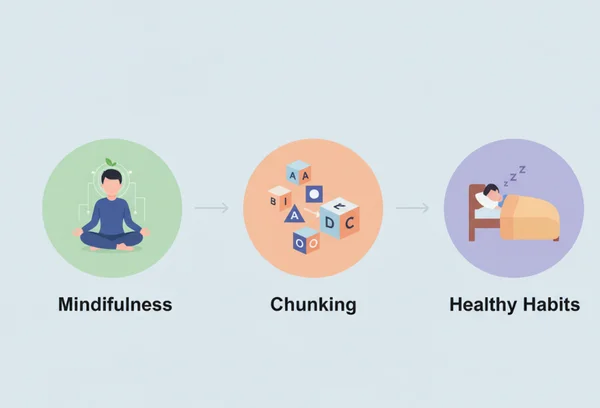
- Mindfulness and Meditation: Research shows that improving your focus can help you use your available working memory more effectively.
- Chunking: This is a technique where you group information into smaller "chunks." Instead of remembering "1-9-4-5," you remember the year "1945."
- Healthy Habits: Sleep deprivation and high stress are "working memory killers." Prioritizing rest can instantly boost your mental capacity.
While "brain games" are popular, the best way to improve is through functional strategies that you apply to real-world tasks.
Your Path to Deeper Understanding of Your Cognitive Profile
Your WAIS Working Memory Index reveals how your brain handles information in real-time—insights that can transform how you approach challenges. Whether through the number-crunching of Arithmetic or the sequencing of digits, these tests reveal your mental agility and focus. Understanding your scores can help you navigate school, work, and personal development with more confidence.
If you have your WAIS results and want to look beyond the basic numbers, we can help. At Wais Test, we provide AI-driven analysis that turns your raw scores into a clear, actionable roadmap for growth. Try our service today to receive a personalized report that explains your unique cognitive strengths and challenges. Knowing how your brain works is the first step toward reaching your full potential.
FAQ Section
Can I improve my working memory through training?
While you may not be able to significantly increase the "raw capacity" of your brain's memory buffer, you can certainly improve your functional memory. By using techniques like chunking, visualization, and mindfulness, you can process information more efficiently. Many people find that after they start your test analysis and learn their baseline, they can apply specific strategies to improve their daily performance.
What causes working memory difficulties?
Several factors can impact working memory. Common causes include ADHD, high levels of anxiety, and chronic stress. Medical conditions, sleep apnea, or even temporary factors like intense fatigue can also lower your performance on these subtests. It is always best to consult a professional if you are concerned about sudden changes in your memory.
How does WAIS working memory assessment differ from other working memory tests?
The WAIS is considered the "gold standard" because it is highly standardized and backed by decades of research. Unlike simple online "memory games," the WAIS measures different types of working memory (auditory, mathematical, and organizational) under the supervision of a trained professional. This ensures the results are accurate and can be compared against a large national average.
What should I do if my working memory scores seem inconsistent with my daily functioning?
It is common for test scores to feel different from your "real life." Testing anxiety can lower your scores, or you may have developed such strong "coping skills" in real life that you don't notice your deficits. If you feel there is a gap between your scores and your reality, you can see your results through our AI analysis tool to get a second perspective on how those patterns manifest in various environments.