WAIS Test Results: Unlock Deep Insights & Personalized Analysis
Receiving your Wechsler Adult Intelligence Scale (WAIS) report can be a moment of clarity, but often, the sheer volume of numbers leaves you wondering: "What does this really mean for me? How can these complex scores translate into tangible steps for my personal and professional growth?" We understand that feeling, and this guide is crafted to help you bridge that gap.
This guide is designed to help you navigate that journey. We'll break down what your standard report tells you, explore its limitations, and reveal how you can unlock a much deeper, more personalized understanding of your unique cognitive profile. By the end, you’ll know how to move from raw data to real self-knowledge. To begin exploring the fundamentals of cognitive assessment, check out the WAIS test info available on our platform.

What Your Standard WAIS Report Really Tells You
A standard WAIS Test report is the essential first step in interpreting wais scores. It provides a snapshot of your cognitive functioning based on a series of standardized subtests. This report is professionally administered and scored, offering a reliable and valid measurement of various intellectual abilities. It’s the foundational document that lays out the core components of your cognitive landscape.
However, it's crucial to see this report as a starting point, not the final destination. It gives you the "what"—the scores themselves—but often leaves you to figure out the "so what." Understanding these basic components is the key to appreciating what lies beyond them.
Demystifying Your FSIQ and Core Index Scores
At the heart of your report are the Full Scale IQ (FSIQ) and the four primary Index Scores. The FSIQ provides a general measure of your overall intellectual ability. Below this, the Index Scores offer a more detailed view:
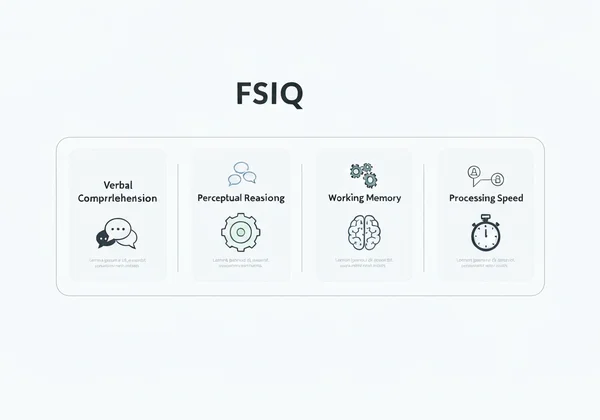
- Verbal Comprehension Index (VCI): Reflects your ability to use language, reason with words, and draw upon your accumulated knowledge.
- Perceptual Reasoning Index (PRI) / Visual Spatial Index (VSI): Measures your non-verbal reasoning, ability to solve novel problems, and interpret visual information.
- Working Memory Index (WMI): Assesses your capacity to hold and manipulate information in your mind for short periods.
- Processing Speed Index (PSI): Gauges how quickly and accurately you can scan, process, and respond to simple visual information.
These scores compare your performance to a large, standardized sample of your peers, giving them context and meaning.
The Limitations of a Basic Score Overview
While incredibly valuable, a list of scores has its limits. A standard report rarely dives into the rich narrative hidden within the numbers. It doesn't fully explain the dynamic interplay between your different cognitive skills. For instance, why might your Verbal Comprehension be very high while your Processing Speed is average? What does a significant gap between your Working Memory and Perceptual Reasoning scores suggest about your learning style or potential daily challenges?
A basic overview provides the building blocks but doesn't construct the building. It leaves you with isolated data points instead of an integrated, holistic picture of how you think, learn, and solve problems. This is where a deeper analysis becomes essential for anyone seeking truly actionable insights.
Diving Deeper: The Power of WAIS Profile Analysis
True understanding comes from wais profile analysis, which involves looking at the patterns, relationships, and discrepancies among your various scores. It’s a more advanced form of interpretation that moves beyond individual numbers to tell a cohesive story about your cognitive architecture. This method treats your results not as a list, but as an interconnected system.
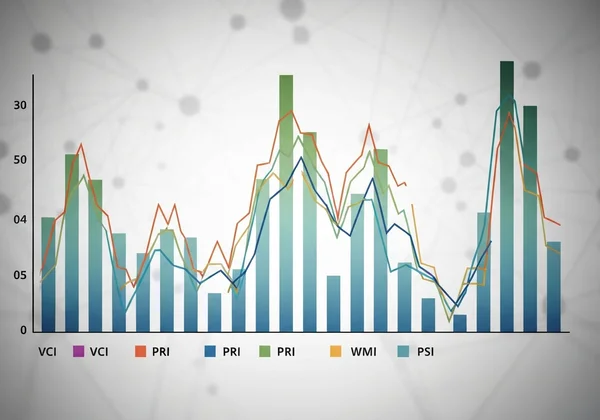
This level of analysis is where the most valuable insights are found. It helps you understand why you excel in certain areas and where you might face challenges, providing a much clearer picture of your cognitive identity. You can start to understand your profil by learning how these scores interact.
Identifying Cognitive Strengths and Weaknesses
By analyzing the peaks and valleys in your score profile, you can pinpoint your natural cognitive strengths and areas for potential development. For example, a high VCI score coupled with an average WMI score might suggest that you are excellent at understanding complex ideas but may benefit from strategies to better retain information in the moment.
This nuanced view helps translate abstract scores into real-world applications. Are you a brilliant verbal strategist? Or a master of visual problem-solving? Profile analysis helps you identify these core talents so you can leverage them more effectively in your personal and professional life.
Understanding Score Discrepancies and Their Implications
Significant differences between your index scores, known as score discrepancies, are often the most revealing part of a WAIS Test assessment. A standard report will note these gaps, but a deeper analysis explores their practical implications. A large discrepancy isn't necessarily a "problem"; it's a key piece of information about your unique cognitive style.
For instance, a gap between verbal and non-verbal skills could explain why you find it easier to express ideas in writing than through a visual presentation. Understanding these patterns is crucial for developing effective compensation strategies and leaning into your strengths. It turns confusion into clarity, helping you work with your cognitive profile, not against it.
Personalized Insights: How AI Transforms Your WAIS Test Report
So, how can you access this deeper level of analysis? While a consultation with a neuropsychologist is the traditional path, technology now offers a powerful and accessible alternative. A cutting-edge wais report analysis powered by artificial intelligence can unlock personalized insights previously unavailable to most people.

AI can process the complex relationships within your score data to deliver a highly personalized and detailed narrative. It serves as a bridge between the clinical data in your report and the practical, real-world advice you need. Our platform is designed to provide just that—an optional, AI-driven tool to help you get more from your results.
The Role of AI in Advanced Cognitive Assessment Analysis
Harnessing AI's ability to discern subtle patterns within vast datasets, our analysis dives deeper. When applied to a cognitive assessment like the WAIS Test, it meticulously examines the intricate web of your subtest and index scores in a way that goes beyond a simple manual review. The AI can compare your specific profile against thousands of data points to highlight what makes your cognitive signature unique.
This isn't about replacing professional judgment but augmenting it. The AI acts as a powerful analytical engine, systematically exploring your data to uncover potential insights, strengths, and areas for growth that might not be immediately obvious.
From Data to Action: Personalized Recommendations and Growth Strategies
The ultimate goal of any assessment is to foster growth. This is where AI-driven analysis truly shines. Instead of just explaining your scores, it translates them into actionable insights and personalized strategies.
For instance, based on your unique profile, an AI-powered report can suggest:
- Career paths that align with your cognitive strengths.
- Learning techniques tailored to your specific working memory and processing speed capacities.
- Communication strategies that leverage your verbal or non-verbal abilities.
- Practical tips for managing potential cognitive challenges in daily life.
This transforms your WAIS Test report from a static document into a dynamic roadmap for personal growth. Ready to see what's possible? Explore our AI tool and discover the story behind your numbers.
Transforming Your Scores into Actionable Self-Knowledge
Your WAIS test results are far more than just figures on a page; they're a powerful compass for understanding your unique cognitive landscape. Don't let this invaluable insight go untapped. By engaging with a deeper analysis, you can transform abstract data into a personalized roadmap for growth. Are you ready to confidently leverage your cognitive strengths and navigate any challenges? Visit our homepage for your personalized analysis toda.
Frequently Asked Questions About WAIS Report Interpretation
Can AI really interpret my WAIS scores better than a standard report?
An AI-powered analysis doesn't replace a standard report but enhances it significantly. While a standard report provides the essential scores, our AI tool focuses on wais profile analysis—interpreting the relationships between those scores. It can identify complex patterns and translate them into personalized, actionable insights about your strengths, challenges, and growth opportunities, offering a level of detail and personalization that a basic summary often lacks.
What is the difference between a standard WAIS Test report and a personalized analysis?
A standard WAIS Test report is the official document from the psychologist who administered the test. It presents your FSIQ, index scores, and subtest scores, comparing them to norms. A personalized analysis, like the one offered at Wais Test, takes that data and builds upon it. It provides a narrative interpretation, explains what score discrepancies mean for you specifically, and offers practical strategies for your career and personal life.
Who can benefit most from a deeper WAIS Test report analysis?
Anyone who wants to turn their WAIS results into a practical tool for self-improvement can benefit. This includes professionals seeking to optimize their career path, students looking for better learning strategies, and individuals driven by a desire for deeper self-understanding. If you've ever looked at your report and thought, "What now?", a deeper wais report analysis is your definitive next step.