WAIS Case Study: AI Reveals Hidden Cognitive Patterns
When you receive a Wechsler Adult Intelligence Scale (WAIS) report, the scores can feel overwhelming. Numbers like the Full-Scale IQ (FSIQ) and the four index scores give you a snapshot of your cognitive abilities. But what if the real story is hidden between those numbers? What if an "average" score is masking significant cognitive strengths and challenges?
This is a common challenge for both professionals and individuals. A standard WAIS report might not capture the subtle interactions between different cognitive skills. This case study explores how AI-powered analysis can go deeper. We will look at a real-world scenario where AI uncovered hidden patterns, providing insights that traditional interpretation missed. At Wais Test, we specialize in helping you understand these complexities. Our platform offers comprehensive guides and an innovative AI tool to provide a deeper analysis of your results.
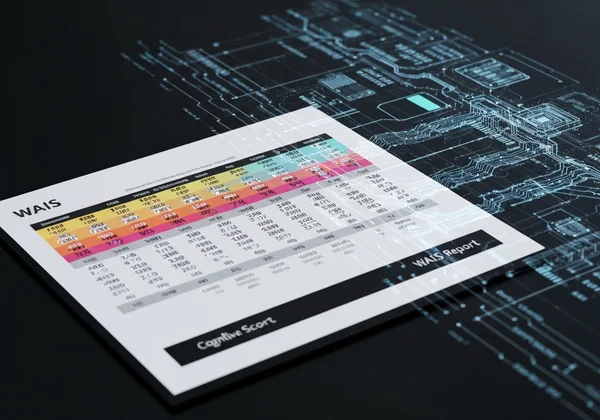
This article demonstrates the power of advanced analysis. We'll show how going beyond surface-level scores can lead to personalized, actionable recommendations that make a real difference in daily life and professional planning.
The Challenge of Standard WAIS Interpretation
Interpreting a WAIS test report is a complex task that requires specialized training. Psychologists look at the main index scores—Verbal Comprehension, Perceptual Reasoning, Working Memory, and Processing Speed—to form a picture of a person's cognitive profile. However, this standard approach has its limits.
The final scores are composites, meaning they are averages of several subtest scores. This can sometimes hide important details. For example, a person might have one very high score and one very low score within the same index, but the final result appears "average." This is where the true picture can get lost.
Limitations of Traditional Profile Analysis
Traditional analysis relies on identifying statistically significant differences between the main index scores. For example, a much higher Verbal Comprehension score compared to the Perceptual Reasoning score might suggest a specific cognitive style. Clinicians are trained to spot these patterns and connect them to real-world functioning.
However, this method primarily focuses on the four main index scores. It often doesn't have a systematic way to analyze the more complex relationships between all the individual subtests. Two people could have the exact same index scores but very different underlying abilities, which a standard report might not highlight. This can be frustrating when you feel that your test results don't fully capture the challenges you face every day.
When "Average" Scores Mask Important Patterns
One of the biggest frustrations with WAIS interpretation is when a profile appears flat or "average." A client might score within the average range on all four indices, leading to the conclusion that there are no significant cognitive issues. Yet, that person may still struggle with organization, planning, or learning new tasks at work.
This is what happened in the case of "Client J." Her report showed average scores across the board. A standard interpretation suggested a normal cognitive profile. However, she reported significant difficulties with executive functions in her daily life. The "average" scores were masking a crucial underlying pattern. This is a perfect example of why a more advanced approach to WAIS score interpretation is needed to unlock the full story.
How AI Analysis Reveals Hidden Cognitive Patterns
Artificial intelligence brings a new dimension to WAIS report analysis. By using sophisticated algorithms, AI can process the full set of subtest scores and identify complex patterns that are difficult for the human eye to see. It doesn't replace the expert judgment of a psychologist but serves as a powerful supplementary tool.
This technology moves beyond the four main indices and delves into the rich data provided by the 10 core subtests. It analyzes how performance on one subtest relates to another, uncovering subtle strengths and weaknesses that form a unique cognitive signature.
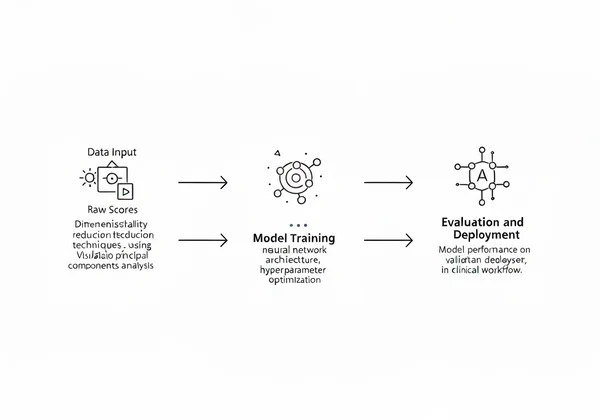
The Algorithm Behind the Analysis
A key advantage of AI is its ability to perform a detailed subtest interaction analysis. For instance, how does performance on Block Design (a measure of visual-spatial reasoning) relate to performance on Digit Span (a measure of working memory)? Traditional analysis might look at these separately, but AI can model their interaction.
This allows it to identify "if-then" patterns. For example, it might find that a person performs well on tasks requiring crystallized knowledge (Vocabulary) but struggles when that knowledge must be applied quickly under timed conditions (Processing Speed). This specific interaction points to a bottleneck that wouldn't be obvious just from looking at the main index scores. Getting this level of personalized cognitive insights is crucial for targeted self-improvement.
From Data to Actionable Insights
The true power of AI analysis lies in its ability to turn raw data into actionable insights. The process is simple yet powerful. You provide your official WAIS scores, and the AI gets to work.
- Data Input: The system takes in all your individual subtest scores.
- Pattern Analysis: The algorithm compares your unique profile against a vast database of cognitive patterns, identifying meaningful relationships and discrepancies.
- Insight Generation: Instead of just numbers, the AI generates a report in clear, easy-to-understand language. It explains what the patterns mean for your strengths, your challenges, and potential areas for growth.
- Actionable Recommendations: The final report provides personalized suggestions, helping you leverage your strengths and develop strategies to support your weaknesses.
This transforms a confusing set of scores into a practical guide for personal and professional development.
Case Study: "Client J" - Average Scores, Unexpected Profile
To see how this works in practice, let's return to the case of "Client J." She was a 30-year-old marketing professional who felt she was underperforming at work despite being bright and creative. She struggled with deadlines and multi-step projects, leading her to seek a cognitive assessment.
Initial WAIS-IV Results and Clinical Observations
Client J’s official WAIS-IV report was unremarkable at first glance. Her Full-Scale IQ (FSIQ) was 105, and her four index scores were all in the average range:
- Verbal Comprehension Index (VCI): 108
- Perceptual Reasoning Index (PRI): 102
- Working Memory Index (WMI): 98
- Processing Speed Index (PSI): 95
A traditional interpretation concluded that her cognitive abilities were evenly developed and within the normal range. This didn't align with her reported struggles. Her clinician noted her frustration, observing that while she could generate great ideas (a strength in verbal comprehension), she had immense difficulty executing them.
AI Analysis: The Hidden Pattern Revealed
Unsatisfied with the standard report, her clinician used an AI analysis tool similar to the one offered at Wais Test. The AI processed all of Client J's subtest scores and uncovered a hidden pattern that the index scores had masked.
The AI discovered a significant intra-index discrepancy within her Working Memory Index. Her score on the Digit Span subtest (repeating numbers) was solidly average. However, her score on the Arithmetic subtest (solving math problems mentally) was significantly lower. The AI flagged this as a critical pattern. It indicated that her core working memory was intact but faltered when she had to mentally manipulate information, not just hold it.
Furthermore, the AI cross-referenced this with her slightly lower Processing Speed score. It identified a specific bottleneck: her ability to hold and mentally organize information under time pressure was her primary challenge. This wasn't just a "weak" working memory; it was a specific weakness in what psychologists call "cognitive flexibility" when speed is required.

Client J's Progress After Implementation
This AI-driven insight was a game-changer. The recommendations were no longer generic tips for improving memory. Instead, they were highly targeted:
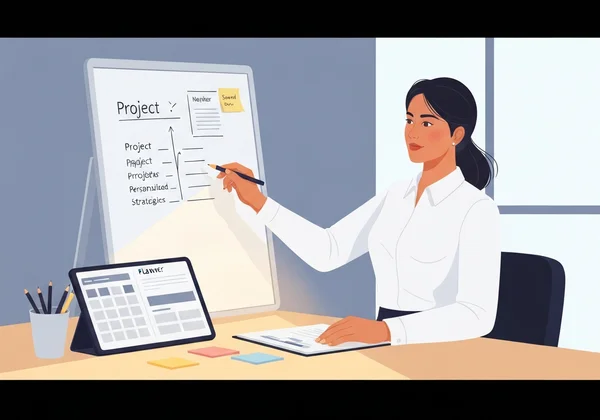
- Externalize Working Memory: Use tools like whiteboards, project management software (like Trello or Asana), and detailed checklists to offload the mental "juggling" of tasks.
- Break Down Projects: Instead of a large goal, break every project into small, sequential steps. This reduces the cognitive load required to plan and execute.
- Practice Timed, Low-Stakes Tasks: To build cognitive flexibility, she was encouraged to use brain-training apps that focused on manipulating information under timed conditions, starting with easy levels.
Client J implemented these strategies. Within months, her performance at work improved dramatically. She felt more in control and less overwhelmed. The AI analysis provided the key that unlocked her true potential by identifying the exact nature of her cognitive bottleneck.
Your WAIS Results: Beyond the Surface Numbers
As this case study shows, your WAIS scores contain a wealth of information that may not be apparent from a standard report. An "average" profile doesn't always mean there are no areas for improvement. A "spiky" profile holds clues to unlocking your unique cognitive strengths.
Practical Applications in Daily Life
Understanding your detailed cognitive profile can translate into real-world benefits. For example, knowing you have strong verbal skills but weaker processing speed might lead you to prepare for meetings ahead of time instead of relying on thinking on your feet. If you have excellent perceptual reasoning but weaker working memory, you might use visual aids and mind maps to organize complex information. These strategies are not about "fixing" a weakness but about working smarter with the brain you have.
This case study demonstrates how looking beyond surface-level scores can reveal valuable insights about cognitive strengths and challenges. By understanding these patterns more deeply, you can develop targeted strategies to leverage your abilities and address areas for growth. Our AI analysis service is designed to help you uncover these hidden patterns in your own WAIS results.
FAQ Section
How accurate is AI analysis compared to clinical interpretation?
AI analysis is designed to be a powerful supplement to, not a replacement for, clinical interpretation. A licensed psychologist provides essential context, including behavioral observations and personal history. The AI excels at detecting complex mathematical patterns within the score data that may not be immediately obvious. The best approach combines the expert judgment of a clinician with the deep data analysis of an AI tool.
Can AI diagnose learning disabilities or ADHD from WAIS scores?
No. This is a critical point. AI analysis cannot and does not provide a medical diagnosis. Conditions like ADHD or specific learning disabilities are diagnosed by qualified professionals through a comprehensive evaluation. This includes the WAIS test but also clinical interviews, rating scales, and other assessments. Our AI report can identify cognitive patterns associated with these conditions, providing valuable information to discuss with your doctor or psychologist.
How is my data protected when submitted for AI analysis?
We take data privacy and security very seriously. All submitted score data is anonymized and handled according to strict privacy protocols. We use secure encryption to protect your information throughout the analysis process. Our goal is to provide you with valuable insights while ensuring your personal data remains confidential and secure. Please refer to our Privacy Policy for full details.
What makes AI analysis different from standard WAIS score interpretation?
Standard interpretation primarily focuses on the four main index scores and significant differences between them. AI analysis goes a level deeper. It examines the interactions between all 10-15 individual subtests, identifying subtle but important patterns of strengths and weaknesses. It transforms this complex analysis into an easy-to-read report with actionable, personalized recommendations that you can apply to your daily life. It’s the difference between a general overview and a detailed, personalized map of your cognitive abilities.