IQ and Mensa: What the Scores, Tests, and Membership Rules Really Mean
Searches for iq and mensa often mix three different questions: what Mensa is, what IQ score might meet its membership requirement, and whether a free online challenge can tell you where you stand. The short answer is that Mensa membership is based on scoring in roughly the top 2% on an approved, properly supervised intelligence test, while online quizzes and practice challenges are only informal learning tools. If you are trying to understand how IQ scores, percentiles, and adult cognitive testing fit together, the WAIS score interpretation resources can give you a broader framework before you overread any single number.

What Is Mensa?
Mensa is an international high-IQ society. Its basic idea is simple: membership is open to people who meet a high-score threshold on an approved intelligence test, without using education, profession, income, politics, religion, or social status as additional entry requirements. The name comes from the Latin word for table, reflecting the idea of people meeting as equals.
Mensa International and national Mensa organizations are not the same thing as an IQ test publisher, a psychology clinic, or a school placement service. They are membership organizations. They may administer or recognize certain tests for membership purposes, but the meaning of an IQ result is still tied to the test used, the testing conditions, the score scale, the norm group, and the purpose of the evaluation.
That distinction matters because many readers arrive through searches such as mensa iq test free, mensa iq challenge, or mensa iq test answers. Those searches often imply a direct path from an online puzzle set to an official membership decision. In reality, Mensa treats properly administered and supervised testing very differently from casual practice questions.
IQ and Mensa Requirements in Plain English
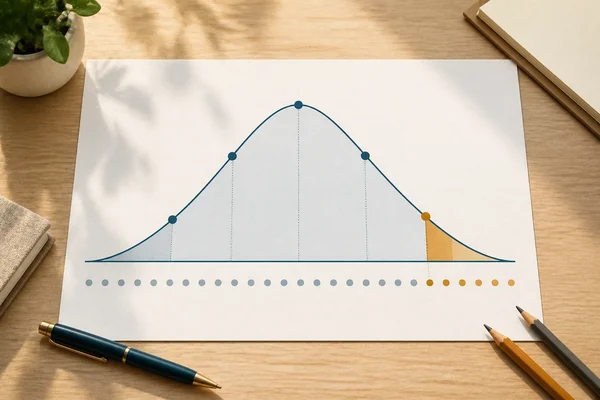
Mensa usually describes its entrance standard as scoring within the upper 2% of the general population on an approved intelligence test. On many modern IQ scales, where the average is 100 and the standard deviation is 15, the 98th percentile sits near 130. That is why people often say that a Mensa-level IQ is "around 130." But that number is only a shortcut.
Different intelligence tests use different scales. A score that looks like 130 on one test may not be the same as 130 on another. Some tests report percentile ranks, standard scores, index scores, or composite scores rather than a single familiar IQ number. Mensa organizations therefore focus on approved tests and qualifying percentiles, not just a universal score chart.
For adult assessment, Wechsler-style scores are often discussed because the WAIS is a widely known adult intelligence scale. A full professional WAIS result is more than a single headline number: it can include verbal comprehension, working memory, processing speed, visual-spatial or reasoning measures, and a Full Scale IQ when appropriate. That is why a WAIS-oriented adult cognitive assessment guide can be useful for understanding what a profile means, even when the immediate question is about Mensa.
A Practical Mensa IQ Score Chart
No simple mensa iq score chart can cover every test, country, and admissions rule. Still, a rough scale helps readers see why "top 2%" is a percentile idea, not just a vanity number.
| Approximate IQ on a 15-SD scale | Approximate percentile | Practical meaning |
|---|---|---|
| 100 | 50th | Near the population average |
| 115 | 84th | About one standard deviation above average |
| 120 | 91st | Clearly above average, but usually below Mensa's top-2% threshold |
| 125 | 95th | Very high compared with the general population |
| 130 | 98th | Near the common Mensa threshold on many IQ scales |
| 145 | 99.9th | Extremely high, but interpretation still depends on the test |
This table is not an admissions chart. It is a context tool. A national Mensa group may publish its own accepted scores for specific tests, and those rules can vary by country, test edition, age group, and documentation standard. The safest phrasing is: Mensa requires a qualifying result on an approved test, and the familiar "130 IQ" idea is an approximation for many modern scales.
Mensa IQ Challenge vs. a Real Admission Test
The Mensa IQ Challenge is useful as practice and as a way to experience puzzle-like reasoning under light pressure. It can show whether you enjoy the style of questions often associated with high-ability testing. It can also help you notice habits such as rushing, overlooking instructions, or getting stuck on one item too long.
It is not the same as a supervised admission test. Practice tests are not usually protected in the same way, do not necessarily use the same norming process, and may not produce a score that can be compared with a professionally administered IQ result. If a page says "free Mensa IQ test and results," read the fine print carefully. Free online results can be interesting, but they should not be treated as proof of membership eligibility or as a complete description of intelligence.
Searches for mensa iq test questions and answers also deserve caution. Real admission tests rely on item security. Looking for answer keys can lead to outdated, copied, or misleading material, and it does not build the kind of reasoning flexibility that tests are designed to sample. A better approach is to practice broad problem types, review your mistakes, and understand the limits of any score estimate.

Why an IQ Score Is Not the Whole Story
IQ scores are useful because they summarize performance against a comparison group. They are not useful when treated as a complete identity label. A single score does not tell you how someone learns, communicates, handles stress, works in a team, persists through boredom, or uses knowledge in real life.
Even within cognitive testing, profiles can be uneven. One person may be verbally strong and slower on timed visual tasks. Another may solve abstract patterns quickly but struggle to hold several pieces of information in working memory. Two people with the same Full Scale IQ may have very different strengths, weaknesses, and support needs.
This is especially important when comparing Mensa membership to WAIS interpretation. Mensa focuses on a high-threshold qualifying result. WAIS interpretation, when done professionally, can examine a broader cognitive pattern. The two topics overlap through IQ, but they answer different questions.
How to Read Mensa-Related Test Results Carefully
Use this checklist before drawing a big conclusion from any Mensa-related result:
- Was the test approved for the purpose you care about?
- Was it supervised or only taken online?
- Does the result report an IQ score, a percentile, an index score, or a rough estimate?
- Is the score based on a current norm group?
- Does the report explain confidence intervals or score variability?
- Are you comparing the score to the right age group and test scale?
- Are you using the result for curiosity, membership, school planning, work decisions, or clinical discussion?
The last question is often the most important. A casual online challenge may be fine for curiosity. Membership eligibility requires a different evidentiary standard. Educational or professional decisions should involve qualified interpretation, especially when the result will affect services, accommodations, or major life choices.

Should You Join Mensa?
Why join Mensa? For some people, the appeal is community: events, discussion groups, publications, special-interest groups, and the pleasure of meeting people who enjoy ideas. For others, the appeal is personal curiosity or a sense of recognition after a qualifying score. Neither reason is wrong.
Joining is less useful if the goal is to prove worth, settle a debate, or turn one number into a life plan. A high IQ score can be meaningful, but it does not remove the need for effort, emotional skills, domain knowledge, mentorship, or good judgment. It also does not make every difficult task easy.
If you are still exploring the topic, treat Mensa as one possible community around high test performance, not as the final authority on intelligence. Read about how IQ tests work, learn how percentiles differ from raw scores, and consider what kind of intellectual environment actually helps you grow.
Use IQ and Mensa Information Without Overreading It
The healthiest way to approach iq and mensa is to separate curiosity from certainty. Mensa can be interesting because it gives a clear membership threshold. IQ testing can be useful because it compares performance to a norm group. WAIS-style interpretation can be helpful because it looks beyond a single score and asks what pattern sits underneath it.
Those three ideas work best when they are kept in proportion. If you want a gentle next step, use a WAIS learning hub to review score patterns, index meanings, and the difference between informal practice and structured assessment. Then decide whether your real question is about joining a society, understanding a score, or learning how your cognitive strengths show up in everyday tasks.
FAQ
What is the minimum IQ to be in Mensa?
Mensa generally requires a score in the top 2% of the general population on an approved, properly supervised intelligence test. On many modern IQ scales, that is roughly around 130, but the exact qualifying score depends on the test and the Mensa organization reviewing it.
Is a 120 IQ considered gifted?
An IQ around 120 is usually considered well above average, but it is typically below the common top-2% threshold associated with Mensa. Whether someone is called gifted depends on the setting, the test, the age group, and the criteria used by a school or organization.
Can a free Mensa IQ test qualify me for membership?
A free online Mensa-style challenge may be useful for practice or curiosity, but it should not be treated as an official admission result. Mensa membership usually requires an approved test administered under proper conditions or documented qualifying scores from an accepted source.
Are Mensa IQ test answers available online?
Real qualifying tests depend on controlled items, so official answer keys are not normally public. Material claiming to provide Mensa IQ test answers may be inaccurate, copied, or unrelated to current admissions testing. Practice broad reasoning skills instead of memorizing supposed answers.
What is Elon Musk's IQ level?
There is no reliable public, independently verified IQ score for Elon Musk from a supervised test report. Online numbers attached to public figures are usually speculation and should not be treated as factual evidence.
What is Sylvester Stallone's IQ?
Public claims about Sylvester Stallone's IQ vary, but a verified supervised test report is not commonly available. For celebrities, it is better to treat IQ claims as unconfirmed unless a credible primary source documents the score and test context.
Is Mensa International the same as American Mensa?
No. Mensa International is the umbrella organization, while national groups such as American Mensa manage membership, testing logistics, events, and documentation rules in their own regions. Always check the rules for the country or national group that applies to you.