Emotional Intelligence: Definition, Examples, and Practical Ways to Build EQ
Emotional intelligence is the ability to notice emotions, understand what they may be signaling, and respond in a way that fits the moment. It is not the opposite of cognitive intelligence. In real life, clear thinking and emotional skill often support each other: one helps you solve problems, while the other helps you stay steady enough to use that problem-solving well. For readers who are also exploring adult cognitive abilities, a cognitive ability learning hub can make the difference between seeing a score as a label and seeing it as one piece of a fuller self-understanding.
What Emotional Intelligence Means
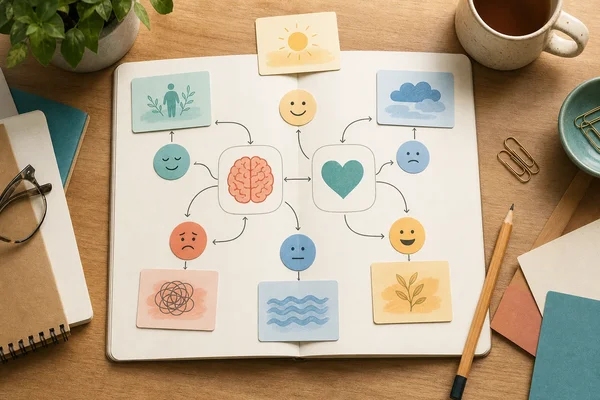
The most useful emotional intelligence definition is practical: it is your capacity to recognize, understand, use, and manage emotions in yourself and in interactions with other people. The phrase is often shortened to EQ, or emotional quotient, although not every expert uses EQ as a strict score.
Being emotionally intelligent does not mean being endlessly calm, agreeable, or cheerful. It also does not mean letting feelings make every decision. A more accurate picture is flexible control. You can feel irritation without snapping, worry without freezing, excitement without overpromising, and disappointment without treating one setback as the whole story.
This is where emotion and intelligence meet. Emotions provide information about needs, values, threats, relationships, and attention. Reason helps you test that information before you act on it. A person with high emotional intelligence is not emotionless; they are better at turning emotional signals into thoughtful choices.
The 5 Keys of Emotional Intelligence
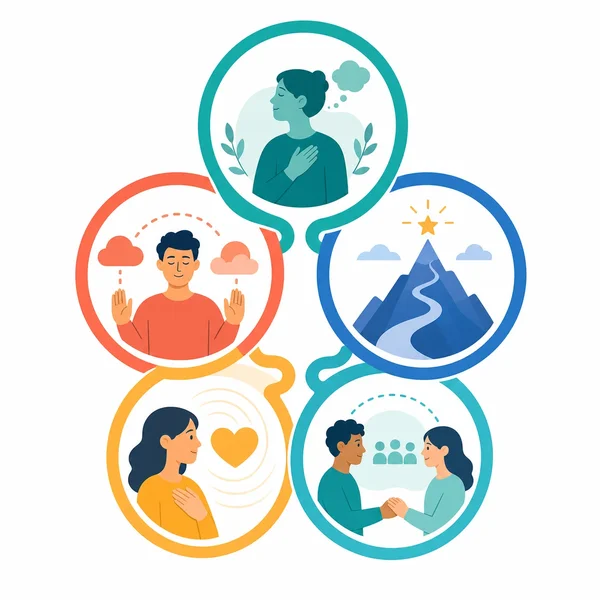
Many readers ask about the five components of emotional intelligence because they make the idea easier to practice. Different models use different labels, but these five skills are common in everyday explanations.
Self-awareness
Self-awareness means noticing what you feel before the feeling silently drives your behavior. Instead of saying, "I am fine," when your body is tense and your thoughts are racing, you might name the emotion more clearly: frustrated, embarrassed, rushed, lonely, or uncertain. That precision matters because each feeling points toward a different need.
Self-regulation
Self-regulation is the ability to pause, choose, and adjust. It does not require suppressing emotion. It asks you to create a little space between the first impulse and the next action. In that space, you can lower your voice, ask for time, write before replying, or decide that a hard conversation deserves more care.
Motivation
In emotional intelligence, motivation is not just ambition. It is the capacity to stay connected to values and long-term goals even when the mood of the moment changes. Someone with strong motivation can feel bored, anxious, or discouraged and still return to the next useful step.
Empathy
Empathy is the skill of noticing what another person may be feeling without assuming you know everything about their inner world. It includes listening to tone, context, silence, facial expression, and the pressure someone may be under. Empathy becomes stronger when it stays curious instead of jumping to a story too quickly.
Social skills
Social skills turn emotional awareness into communication. This includes giving feedback, receiving feedback, repairing misunderstandings, setting boundaries, and adjusting your message to the person in front of you. Social intelligence overlaps here: emotionally intelligent people tend to read the room and adapt without becoming fake.
Emotional Intelligence Examples in Real Life
Emotional intelligence examples are easiest to see in ordinary moments. Imagine a team meeting where someone criticizes your idea. A low-EQ reaction might be to interrupt, defend every detail, or shut down completely. A more emotionally intelligent response might sound like: "I am feeling a little defensive, but I want to understand the concern. Which part seems weakest to you?"
In a relationship, emotional intelligence might look like naming the real feeling beneath a complaint. Instead of saying, "You never listen," a person might say, "I felt unimportant when I was talking and the conversation moved on quickly." The second version is still honest, but it gives the other person a clearer path to respond.
At work, emotional intelligence can help with leadership, collaboration, and feedback. A manager with strong EQ notices when a team is overloaded, names priorities clearly, and invites concerns before resentment builds. An employee with strong EQ may ask clarifying questions instead of pretending to understand, or may address conflict early before it becomes a pattern.
Emotional intelligence also matters in learning. If a difficult task makes you feel slow or exposed, EQ helps you separate the emotional discomfort from the actual problem. That is useful for anyone studying reasoning, memory, attention, or WAIS-related concepts through WAIS-focused learning resources, because self-reflection works best when it is patient rather than harsh.

Signs of High and Low Emotional Intelligence
Signs of high emotional intelligence are usually visible in patterns, not one perfect moment. Emotionally intelligent people often name feelings specifically, pause before reacting, ask questions when they are unsure, notice nonverbal cues, and repair harm when they realize they have contributed to a problem. They can disagree without treating disagreement as rejection.
Signs of low emotional intelligence can also show up as repeated patterns. Common examples include blaming others for every emotional reaction, dismissing feedback, interrupting during tense conversations, struggling to describe feelings, missing obvious social cues, escalating small conflicts, and avoiding responsibility after hurtful behavior. These signs do not make someone a bad person. They point to skills that may need more attention and practice.
Context matters. Stress, grief, sleep loss, culture, trauma history, power dynamics, and neurodiversity can all affect how feelings are expressed or interpreted. For that reason, it is better to use signs as reflection prompts, not as labels to stick on yourself or other people.
Emotional Intelligence Tests, Quizzes, and Books
Searches for emotional intelligence test, emotional intelligence quiz, emotional intelligence PDF, and emotional intelligence book all point to the same desire: people want a clearer way to understand their emotional patterns. That can be useful, as long as the tool is treated as a starting point rather than a final verdict.
There are several kinds of emotional intelligence assessments. Some ask you to rate your own habits. Others ask how you would respond to emotional situations. Some academic tools are designed for research or professional use. A quick online quiz can help you notice patterns, but it cannot capture the full context of your relationships, stress level, communication style, or life history.
Books can be helpful because they slow the process down. Daniel Goleman's work helped popularize emotional intelligence for a wide audience, while later books and courses often focus on workplace leadership, relationships, parenting, or communication. When choosing a book, look for practical exercises, clear limits, and examples that feel grounded rather than dramatic.
If you already use self-reflection tools for cognitive strengths and problem-solving, emotional intelligence can be a helpful companion lens. The goal is not to rank your entire personality. It is to understand how emotion, attention, reasoning, and behavior influence each other.
How to Improve Emotional Intelligence
Improving emotional intelligence is less about becoming a different person and more about practicing small skills repeatedly. These steps are simple, but they become powerful when you use them before, during, and after real conversations.
First, build a better emotion vocabulary. Replace broad words like bad, stressed, or annoyed with more exact words such as disappointed, overwhelmed, resentful, uncertain, ashamed, tense, or overstimulated. A more precise word often reveals a more precise next step.
Second, map the trigger to the need. Ask, "What changed right before this feeling got stronger?" Then ask, "What need, value, or fear might be underneath it?" For example, anger may be connected to fairness, anxiety to uncertainty, sadness to loss, and defensiveness to feeling judged.
Third, practice the pause. A pause can be one breath, a glass of water, a short walk, or a sentence such as, "I want to answer carefully, so give me a moment." The pause is not avoidance. It is a way to keep your next action aligned with your actual goal.
Fourth, express feelings with structure. A useful pattern is: "I feel [emotion] when [specific situation] because [impact or need]. Could we [clear request]?" For example: "I felt rushed when the plan changed at the last minute because I need time to prepare. Could we agree on changes earlier next time?"
Fifth, review patterns after the moment has passed. Ask what you noticed, what helped, what made things worse, and what you would try next time. This turns emotional experiences into learning data without making every feeling a crisis.

Emotional Intelligence and Cognitive Intelligence Work Best Together
Emotional intelligence is important because life rarely separates thinking from feeling. You may need logic to compare options, but you also need emotional awareness to notice fear, pride, impatience, or shame shaping the way you compare them. You may have strong verbal reasoning, memory, or pattern recognition, but those strengths are easier to use when your emotional state is not secretly steering the whole process.
That is why emotional intelligence belongs beside cognitive self-understanding, not beneath it. Cognitive ability can help you analyze a problem. Emotional maturity can help you decide when to speak, when to listen, when to pause, and when to ask for support. If you are reflecting on how your thinking patterns work, optional cognitive profile reflection tools can sit alongside emotional intelligence practice as part of a broader learning process.
Keep the boundaries clear. Emotional intelligence content is educational, and self-reflection tools are not a substitute for qualified support when distress, conflict, or daily functioning feels hard to manage. Used gently, though, emotional intelligence can make self-knowledge more usable: not just what you can think through, but how you bring that thinking into conversations, choices, and relationships.
FAQ
What are 7 signs of low emotional intelligence?
Seven common signs are difficulty naming feelings, quick defensiveness, blaming others for every reaction, interrupting during conflict, missing social cues, avoiding repair after hurtful behavior, and escalating small disagreements. These signs are best used as reflection prompts, not as fixed labels.
What are the 5 keys of emotional intelligence?
The five keys are self-awareness, self-regulation, motivation, empathy, and social skills. Together, they help a person notice emotions, manage reactions, stay connected to goals, understand others, and communicate more effectively.
How can you tell if someone is emotionally intelligent?
Look for repeated behavior over time. Emotionally intelligent people tend to listen well, describe feelings clearly, accept feedback without constant defensiveness, adjust their communication to the situation, and repair misunderstandings when they can.
How do I express my feelings?
Use a clear, specific sentence: "I feel [emotion] when [situation] because [impact or need]. Could we [request]?" This keeps the focus on your experience and gives the other person a concrete way to respond.
Is emotional intelligence the same as emotional maturity?
They overlap, but they are not identical. Emotional intelligence is usually described as a set of skills for understanding and managing emotions. Emotional maturity is broader and often includes responsibility, perspective, patience, and consistency over time.
Can an emotional intelligence test tell me my EQ?
An emotional intelligence test or quiz can highlight patterns and give you useful questions to explore. It should not be treated as a complete measure of who you are, especially when stress, culture, communication style, and life context can all shape the result.