Decoding the WAIS Block Design Test: What It Really Measures
The WAIS Block Design subtest can seem like a simple puzzle at first glance—a race against the clock to arrange red-and-white blocks into a specific pattern. Yet, this single task is a powerhouse of cognitive assessment, revealing a wealth of information about how your brain processes visual information, solves problems, and executes solutions. Whether you're a professional aiming for deeper clinical insight or an individual curious about your own WAIS report, you've likely wondered what does the wais test measure through this specific task? This guide will decode what the fascinating WAIS Block Design Test truly measures and why it's a cornerstone of modern intelligence testing. For a complete understanding of your results, you can explore your profile on our site.
The Block Design Subtest: A Core WAIS Component
Block Design is one of the most recognized wais subtests and a key component of the Wechsler Adult Intelligence Scale (WAIS). It serves as a primary measure of non-verbal fluid reasoning and visual-spatial organization. Unlike tests that rely heavily on language or accumulated knowledge, Block Design assesses your ability to reason and solve novel problems in real-time.
What is the WAIS Block Design Test?
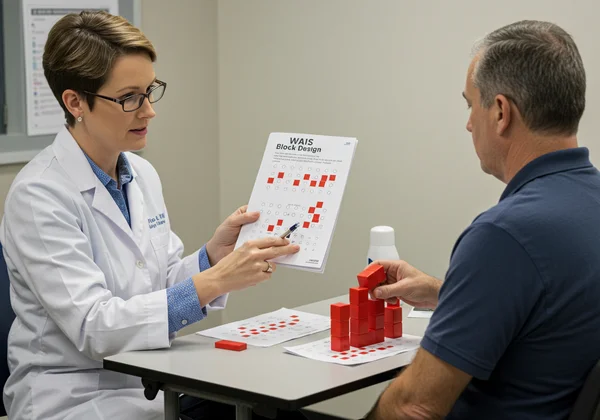
The test presents you with a series of two-dimensional geometric patterns, one at a time. Your task is to replicate each pattern using a set of identical blocks that have all-white sides, all-red sides, and half-red/half-white sides. The patterns start simple and become progressively more complex, and each attempt is timed. It’s a pure test of analyzing a whole, breaking it down into component parts, and mentally or physically manipulating those parts to reconstruct the whole.

How the Block Design Test is Administered
Administered by a trained psychologist, the test is highly standardized to ensure results are reliable. You are given the blocks and shown a pattern in a stimulus booklet or on a screen. The examiner provides instructions and then times your performance on each item. Bonus points are often awarded for quick and accurate solutions on more difficult items, highlighting the importance of both accuracy and efficiency in this cognitive domain. This hands-on, timed format provides a direct window into your on-the-spot problem-solving capabilities.
Cognitive Skills Assessed: Perceptual Reasoning & Beyond
While Block Design is a core subtest of the Perceptual Reasoning Index (or Visual Spatial Index in the WAIS-V), its performance draws upon a symphony of cognitive abilities. It’s not just about what you see, but how you analyze, plan, and execute a solution based on that visual input.
Visual-Spatial Abilities and Problem-Solving
At its heart, Block Design measures your visual-spatial reasoning. This involves the ability to perceive visual patterns, differentiate among them, and understand how they are synthesized from individual components. It assesses your capacity for non-verbal concept formation, visual-motor coordination, and fluid intelligence—the ability to think logically and solve problems in novel situations, independent of acquired knowledge. Someone with strong skills here can mentally rotate the blocks and visualize how they fit together before ever touching them.
The Role of Processing Speed and Working Memory in Block Design
Performance on the Block Design test isn't isolated to just one skill. It is also influenced by other critical cognitive functions. Your processing speed affects how quickly you can analyze the pattern and execute the motor movements to arrange the blocks. A faster processing speed often leads to bonus points and a higher score.
Furthermore, working memory plays a subtle but vital role. You must hold the visual pattern in your mind while simultaneously figuring out which sides of the blocks to use and how to orient them. This mental juggling act is a key part of the challenge, making Block Design a rich source of information about how different cognitive systems work together. To see how these skills form a cohesive picture, you can get deeper insights with our tools.

Interpreting Block Design Performance and Scores
Understanding your score on the Block Design subtest is the first step toward appreciating what it says about your cognitive profile. The numbers are more than just a grade; they are data points that, when compared to a standardized sample, reveal your relative strengths.
Understanding Your Block Design Raw and Scaled Scores
Your initial score is the raw score, which is typically the total number of points earned from correctly completed items, including any time bonuses. This raw score is then converted into a scaled score by comparing your performance to a large, representative sample of your peers (the normative group). Scaled scores on WAIS subtests have an average of 10 and a standard deviation of 3. Therefore, a score between 8 and 12 is generally considered within the average range, while scores above 13 are a strength and scores below 7 may indicate a comparative weakness.
What High vs. Low Block Design Scores Can Indicate Clinically
A high score on Block Design often points to strong non-verbal fluid reasoning, an ability to analyze abstract visual information, and good visual-motor integration. These are valuable skills in fields like engineering, architecture, design, surgery, and computer programming. It suggests an individual who can see the "big picture" and effectively manage the details to bring it to life.
Conversely, a lower score is not a judgment of overall intelligence. It simply indicates a potential weakness in this specific area of cognitive functioning. It can be a valuable piece of information in a broader neuropsychological assessment, as difficulties with visual-spatial tasks are sometimes associated with certain learning disabilities or neurological conditions. However, a single subtest score should never be interpreted in isolation. A comprehensive WAIS report analysis is essential.
Leveraging Block Design Insights for Personal Growth & Professional Understanding
The beauty of the WAIS is that it provides a detailed map of your cognitive landscape. Understanding your Block Design performance can empower you to leverage your strengths and support your weaknesses in practical, everyday ways.
Applying Your Visual-Spatial Strengths in Daily Life
If you have a strength in Block Design, you can lean into it. You might find you excel at tasks that require spatial planning, such as assembling flat-pack furniture without frustration, navigating with a map, organizing a space efficiently, or even mastering complex video games. Professionally, this could translate to success in data visualization, UI/UX design, or any field that requires seeing patterns and creating order from chaos.
Beyond the Score: Integrating Block Design into a Full Cognitive Profile
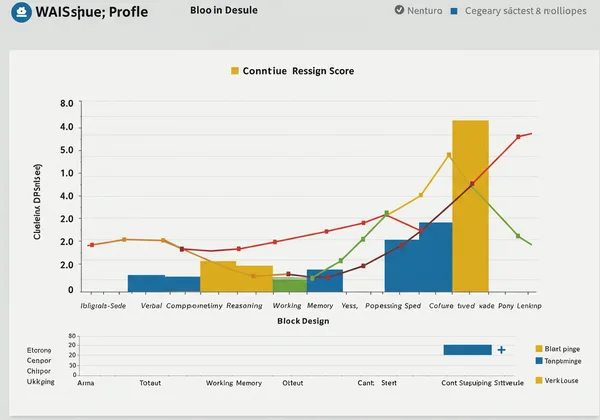
The most powerful insights come from viewing your Block Design score not as a standalone number, but as one part of your complete cognitive profile. How does your non-verbal reasoning compare to your verbal comprehension? Is your processing speed consistent with your problem-solving abilities? Answering these questions can reveal hidden patterns and provide a much richer understanding of how you think. Our innovative AI tool is designed to help you understand your scores in this holistic context.
Unlocking Your Cognitive Blueprint: Next Steps
The WAIS Block Design test is far more than a simple game with blocks. It is a sophisticated instrument for measuring some of the most essential aspects of human intelligence: visual analysis, non-verbal problem-solving, and the integration of multiple cognitive skills. Understanding your performance provides a valuable glimpse into your unique cognitive architecture.
If you have your full WAIS report and want to move beyond individual subtest scores to see the complete picture, Wais Test is here to help. Explore our platform to learn more about the WAIS and discover how our AI-powered analysis can transform your complex report into a personalized blueprint for growth. Visit Wais Test today to unlock a deeper understanding of your mind.
Frequently Asked Questions About the WAIS Block Design Test
What are the main WAIS subtests, and how does Block Design fit in?
The WAIS is organized into four main indexes: Verbal Comprehension, Perceptual Reasoning (or Visual Spatial), Working Memory, and Processing Speed. Block Design is a core subtest within the Perceptual Reasoning/Visual Spatial Index, which assesses your ability to interpret and organize visually perceived material and solve non-verbal problems.
What does a high or low score on the WAIS Block Design test mean for me?
A high score typically indicates strong visual-spatial reasoning and problem-solving skills. A low score suggests a relative weakness in this area. However, this score is just one data point and should be interpreted by a qualified professional within the context of your full cognitive profile and personal history. For a detailed breakdown, you can learn more here.
Can the WAIS Block Design test be taken online?
No, the official WAIS test, including the Block Design subtest, cannot be administered online. It requires a highly standardized, in-person setting with a trained examiner to ensure the results are valid and reliable. Wais Test is a resource for understanding the test and analyzing existing results, not for administering it.
How long does the Block Design subtest usually take?
The total time varies depending on the individual's speed and accuracy. Each item has a specific time limit, and the subtest is discontinued after a certain number of consecutive incorrect items. The entire subtest administration typically takes between 5 and 15 minutes.
Who typically uses the WAIS Block Design test results?
The results are used by a wide range of professionals, including clinical psychologists, neuropsychologists, and educational specialists, to assess cognitive functioning for clinical diagnosis, treatment planning, and vocational or academic guidance. Individuals also use the results for personal development and self-understanding. Find out how you can use your results today.